Car Care Tips
What to do when your check engine light comes on
The DuFresne's Team · 3 min read
First, pay attention to how the car behaves
A check engine light can appear while the car seems completely normal, or alongside rough running, reduced power, or unusual smells. Your first task is not to guess which part failed. It is to decide whether you can safely continue. Notice whether the light is steady or flashing and look for other warning indicators.
If the engine is shaking, power drops sharply, smoke appears, or you notice signs of overheating, pull over as soon as it is safe. Shut the engine off when appropriate and arrange assistance. Do not keep driving simply because the vehicle can still move. Your owner’s manual provides important model-specific instructions.
A flashing light needs urgent attention
A flashing check engine light commonly indicates an active misfire that can damage the catalytic converter. Reduce load on the engine and get to a safe stopping place. Avoid hard acceleration and do not continue a trip hoping the light will settle down. Towing may be the safest way to reach a repair facility.
A steady light without other symptoms is often less urgent, but it still needs timely diagnosis. It is not a guarantee that continued driving is harmless. Check your owner’s manual, consider the symptoms, and call for guidance. An oil-pressure or temperature warning requires a different response and should not be treated as an ordinary check engine light.
Let's take a look at your car.
Book OnlineCheck the simple things without erasing clues
If your vehicle has a conventional fuel cap and the light appeared after refueling, check that the cap is properly secured according to the manual. A loose cap can cause an evaporative-emissions fault on some vehicles. Capless systems have different procedures. Do not force components or assume the cap explains every warning.
Avoid disconnecting the battery or clearing codes just to make the light disappear. That can erase useful information and reset emissions readiness monitors. The light may also take time to go out after a problem is corrected. Record when it appeared, recent service or fueling, and whether symptoms happen during acceleration, idling, or a cold start.
Why reading a code is only the beginning
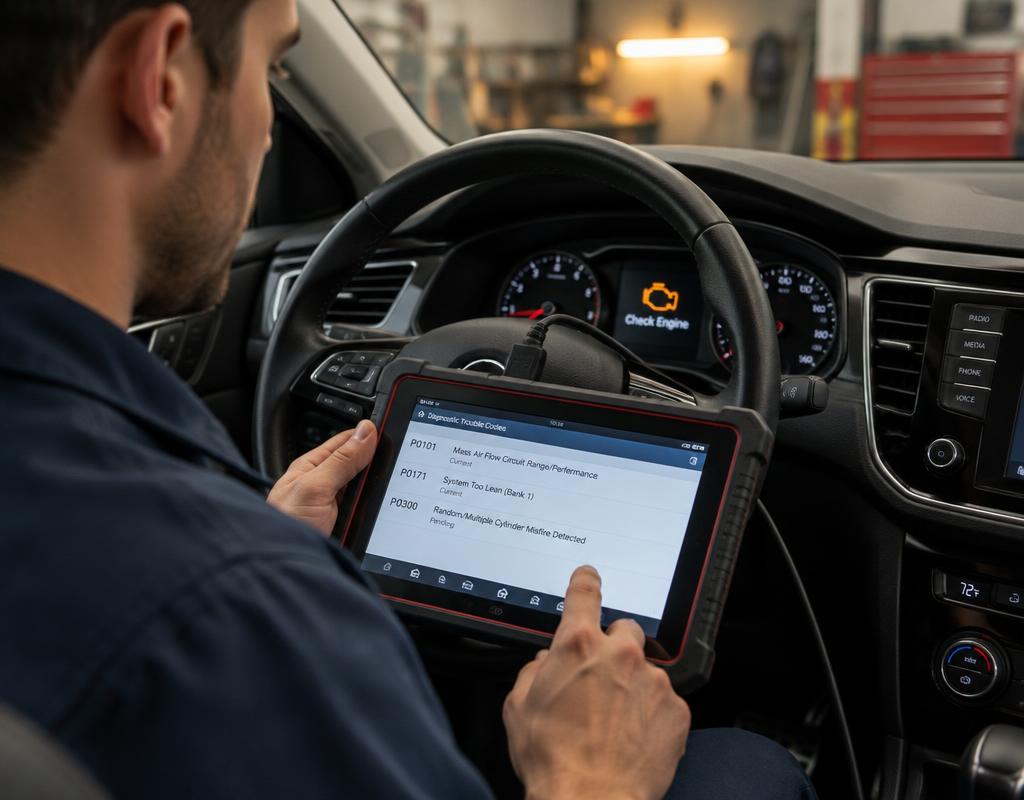
A diagnostic trouble code identifies a detected condition or affected system. It does not necessarily identify the part that should be replaced. A sensor-related code, for example, can result from wiring problems, leaks, or operating conditions elsewhere. Replacing the named component without testing can leave the original problem unresolved.
At DuFresne's in Portland, ASE technicians can use fault information, vehicle data, and appropriate testing to investigate the cause. Ask what diagnostic work is proposed and how findings will be explained before repairs are approved. Describe the symptoms in your own words, even if they seem unrelated. A brief account of when the trouble occurs can be more useful than a confident guess about the part.
Make a plan for repair and follow-up
Once the cause is identified, request an estimate and ask whether any driving restrictions apply while you decide. After repair, some vehicles need additional operation before emissions monitors show ready. Follow the guidance for your vehicle rather than relying on a generic mileage target from the internet.
Do not let an unexplained warning become background scenery on your dashboard. For help understanding a check engine light and choosing the next safe step, contact DuFresne's. If the vehicle is safe to bring in, Book Online.